
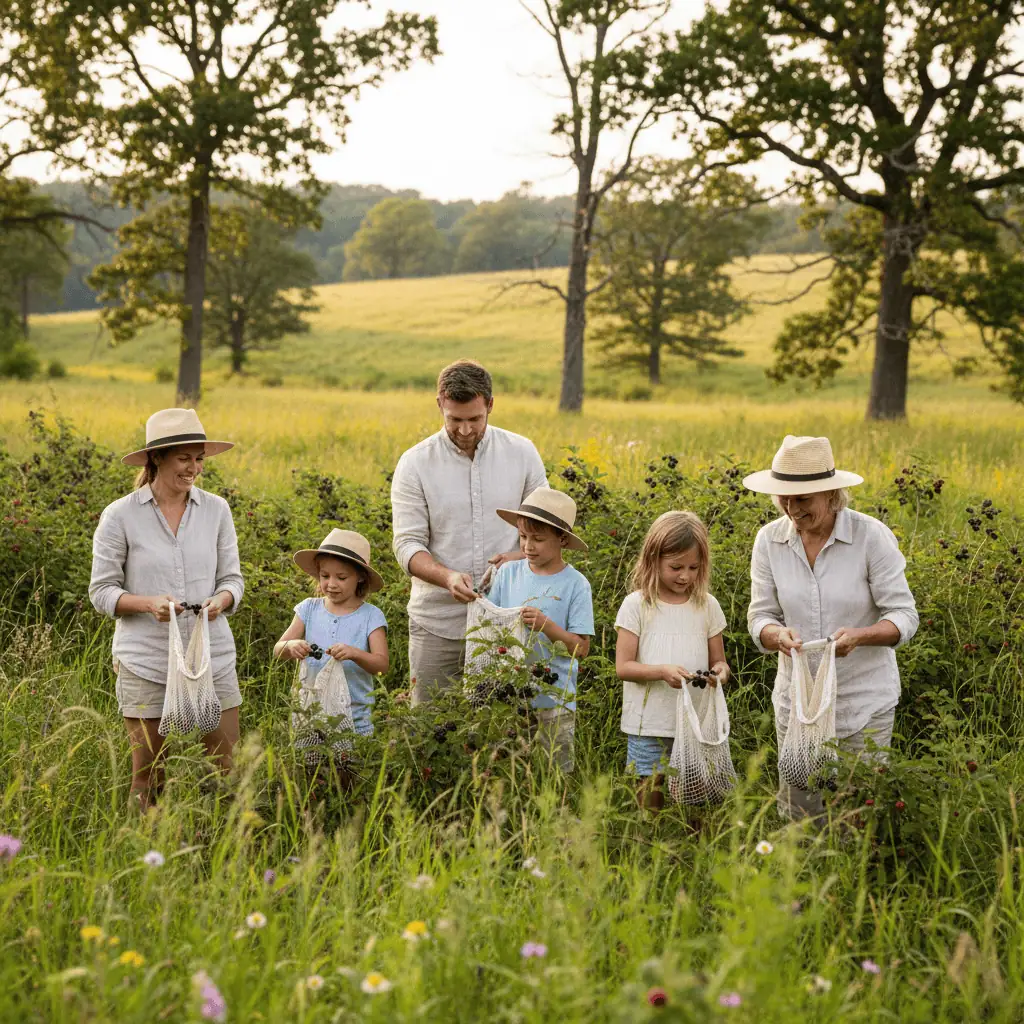
Trading plastic water-park slushies for sun-warmed berries is easier than you think—just step out of your Bonanza campsite and into the oak-savanna fringe where black raspberries glow like little purple lanterns. Whether you’re herding kiddos, snapping couple selfies, strolling at a retiree pace, wrangling a scout troop, or squeezing in a pick before your 10 a.m. Zoom, this Sweet Wild Harvest Guide maps out the exact trails, peak weeks, and safety hacks you need.
Key Takeaways
• Wild berries grow right outside Bonanza Campground in sunny oak-savannas
• Know the sweet spots by season:
– May–June: serviceberries, wild strawberries
– Late June–July: black raspberries, dewberries
– July–August: blackberries
– August–September: elderberries, chokecherries
– September–October: hazelnuts, wild grapes
• Five trailheads within 30 minutes; some have boardwalks for strollers, others give great photo views (GPS pins provided later)
• Safety Rule of Three: match leaf shape, stem color, and fruit cluster before tasting
• Harvest tip: take no more than 10 % of any bush so wildlife still has food
• Pack light but smart: mesh bag, water, sun hat, closed-toe shoes, phone ID app
• Early morning picking = cooler temps, firm fruit, and better chances to spot cranes or deer
• Easy campfire cobbler recipe: 5 cups berries, 2 tbsp butter, ½ cup biscuit mix + sugar, cook 20 min in skillet
Why Oak-Savanna Berries Are Extra Sweet
Sandy soils and full sun bake the sugars into every serviceberry and blackberry you’ll taste. These open patches act like natural ovens, concentrating flavor the way a stovetop reduces syrup. Add in Wisconsin’s warm summer nights and you get fruit that rivals any farmers-market pint.
Fire has shaped these savannas for centuries, clearing brush and giving berry-loving Rubus shrubs space to thrive. When you wander through a recently burned clearing, you’re walking into a buffet rebuilt by nature’s own landscaping crew. Deer, songbirds, and even the occasional sandhill crane depend on the same berries you’re after, so a light touch keeps the ecosystem humming.
Season-by-Season Flavor Calendar
Timing is half the adventure. Print this quick-glance list on a sticky note and slap it to the RV fridge so you never miss peak sweetness. A little planning now means fewer “are we there yet?” questions later and more ripe handfuls for pancake topping tomorrow morning.
• Late May–June: serviceberries and wild strawberries along sunny edges.
• Late June–July: black raspberries and dewberries pop in half-shaded clearings.
• July–August: blackberries swell after warm rainfall—bring a bigger bucket.
• August–September: elderberries and chokecherries cluster near moist margins.
• September–early October: hazelnuts and wild grapes wrap up the season.
Weather can nudge these dates by a week or two, so scout higher slopes if your first stop feels picked over. Early mornings mean firmer fruit and cooler temps; pair sunrise foraging with an afternoon splash across the street at Mt. Olympus for the tastiest, least-sweaty itinerary. An extra benefit of dawn outings is a better chance of seeing cranes glide across misty openings while you harvest breakfast.
Five Trailheads Within Half an Hour
Rocky outcrops, stroller-ready boardwalks, and empty backroads all sit within a 30-minute drive of Bonanza. Plug in the GPS and choose the vibe that fits your crew, from shady sit-downs for grandparents to cliff-top photo ops for social-savvy couples. Every trail listed here was scouted with parking, restroom access, and navigation ease in mind.
1. Rocky Arbor State Park 43.6497, –89.7910 – Paved lot, restrooms, and a 0.7-mile loop where toddlers can pluck berries right off trail-side shrubs.
2. Dell Creek Wildlife Area 43.7151, –89.8984 – Gravel pull-off, no fee; dawn visits reward patient photographers with crane flyovers above dewy grass.
3. Mirror Lake State Park, Echo Rock Trail 43.5679, –89.8245 – $8 day pass and a stroller-friendly boardwalk ending at Echo Rock, an Instagram cliff backdrop.
4. Lyndon Station pine-oak backroads – Follow County N for a self-guided driving loop; retirees love the quiet pull-outs and shady benches.
5. Newport Savanna restoration plot – Call ahead for group permits; picnic tables make post-forage debriefs easy for scouts and reunions.
Most trailheads use self-service kiosks, so stash small bills or a credit card in your daypack. Link these stops in a single clockwise loop from the campground to save gas and keep the cooler cold. If you need a deeper primer on foraging etiquette, the DNR’s concise overview at wild edibles guide is worth a glance before you set out.
Grab-and-Go Gear Lists
A mesh bag and curiosity are enough, but a few extras dial the outing from good to legendary. Families should add a toddler-proof berry scoop and swap flip-flops for closed-toe shoes—oak savannas hide prickly surprises. Couples chasing photo gold can tuck a neutral picnic blanket and clip-on macro lens beside the sunscreen for scroll-stopping shots.
RV travelers thrive on efficiency: a collapsible colander nests neatly in your sink, and a laptop-friendly shoulder bag keeps berries safe while you trek back to Wi-Fi. Running late? Use this five-minute checklist: water bottle, sun hat, mesh bag, phone with ID app, and one lightweight container that won’t squash treasure on the ride home. A quick scan of the forage magazine piece can also spark menu ideas while your coffee brews.
Pick Safely and Sustainably
Teach every forager—especially kids—the rule of three: match leaf shape, stem color, and fruit cluster before tasting. Pokeweed and nightshade sport shiny, single-stem berries, a clear contrast to the clustered druplets on raspberries and blackberries. Pack a pocket loupe or tap your phone’s macro mode to examine tiny hairs that confirm a Rubus ID.
Taste only one berry if uncertain and wait 15 minutes for any reaction. Follow a take-no-more-than-10-percent guideline so shrubs bounce back and wildlife keeps its pantry stocked. Stick to established paths to protect fragile sandy soils, carry out every stem and snack wrapper, and use soft containers—hard coolers can snap branches when propped beneath bushes.
Campground Kitchen Magic
Back at Bonanza, swing by a potable-water spigot and rinse fruit in a collapsible colander to stop spoilage before it starts. Spread berries on paper-towel-lined trays in the RV fridge; sealing them warm inside zip bags invites mush. Tent campers should lock harvests in a vehicle or the campground bear box—midnight raccoons love free buffets.
Ready for dessert? Melt two tablespoons of butter in a cast-iron skillet, add five cups of mixed berries, sprinkle a half-cup of biscuit mix and sugar over the top, then cover the grate and let the fire work its magic for 20 minutes. Prefer breakfast? Simmer elderberries with a dash of water and honey for a syrup that turns pancake stacks into purple perfection. Grab ice at the camp store to freeze any leftovers for the ride home, and you’ll relive that sweet north-woods moment long after checkout.
Those sun-sweet berries are practically waving at you from the edge of our property—ready to top tonight’s skillet cobbler or tomorrow’s pancake stack. Pitch your tent or pull in the RV at Bonanza Camping Resort, and you’ll be less than a songbird’s flight from every trail in this guide, plus hot showers, a heated pool, and the Dells’ splashy thrills when you need a cooldown. Ready to trade screen time for foraging time? Reserve your campsite or family cabin today and let your next memory-making adventure begin right outside your door.
Frequently Asked Questions
Q: