
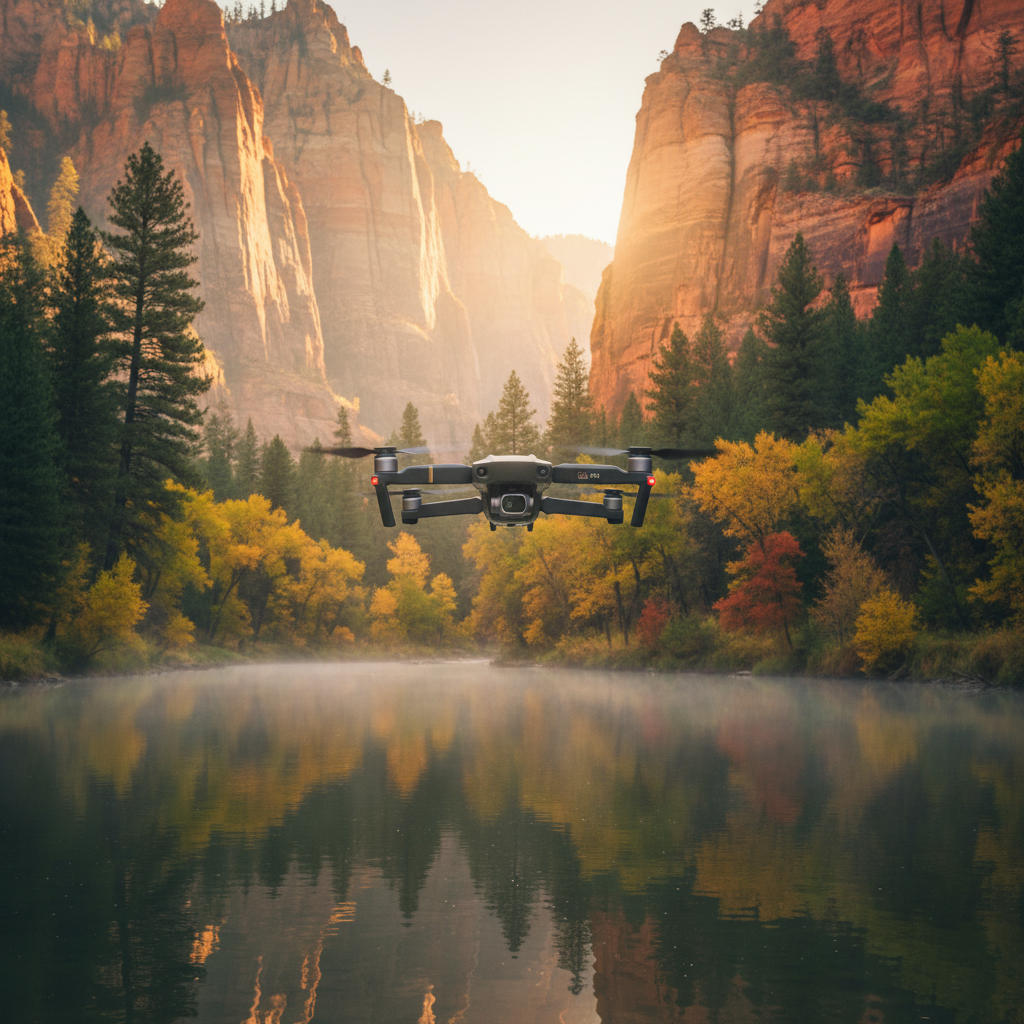
Think the Dells’ towering sandstone walls are off-limits to your drone? Good news: “no-fly” doesn’t have to mean “no epic footage.” From kid-friendly overlooks to secret sunrise pull-offs perfect for 4K fly-throughs, there are legal launch spots just beyond the state-land boundary—many only 15 minutes from your Bonanza campsite.
In the next five minutes you’ll learn:
• Exactly where the closed airspace ends (with one tap in a free app).
• The sunrise window when the gorge glows gold—before the tour-boat wakes your kids or drains your batteries.
• Pro-level filter and safety tricks that keep both TikTok followers and park rangers happy.
Ready to swap guesswork for jaw-dropping canyon reels—and still make it back in time for s’mores? Let’s lift off.
Key Takeaways
• The Dells’ tall, orange cliffs look best at sunrise and sunset, perfect for jaw-dropping drone videos.
• State-run land along the river is a no-fly zone, but you can launch legally from spots just outside the boundary.
• Use the free B4UFLY or AirMap app to see the red “do not fly” line in one tap.
• Follow FAA rules everywhere: keep your drone under 400 ft, turn on Remote ID, and carry your TRUST or Part 107 proof.
• Safe, legal launch spots only 7–15 minutes from Bonanza Camp include River Road Boat Launch, Farmer Olson’s field, Newport Park Overlook, McCoy’s Upper Rim, and Lake Delton’s East Shore Pier.
• Leave at least a 300-ft gap between your drone and the restricted line to protect against GPS drift.
• Best light: about 5:30 a.m. for calm, golden walls and about 7:30 p.m. for warm sunset tones; fall colors add extra wow.
• Pack ND16 or ND32 filters, a polarizer, shoot in RAW, and bring two spare batteries to keep colors rich and footage smooth.
• Fly with a friend watching, stay 100 ft sideways and 50 ft above tour boats, and set Return-to-Home at 250–300 ft over land.
• Bonanza Camping Resort offers outlets, Wi-Fi, and open fields, making it a handy base to charge gear, practice, and get local tips.
Why These Cliffs Deserve a Spot on Your Memory Card
The Wisconsin River carved the Dells more than 500 million years ago, leaving a sandstone gorge split into Upper and Lower reaches by Kilbourn Dam. Sheer walls tower higher than a ten-story building, creating the kind of vertical drama that lets drones steal the show. Most travelers glimpse the cliffs only from crowded tour boats, so aerial shots remain rare, share-worthy, and—when captured legally—instantly scroll-stopping for friends back home.
Beyond the visual payoff, the gorge’s Cambrian layers glow rich amber at dawn and burnished orange just before sunset, gifting your footage built-in color grading straight from nature. Because the river snakes north–south, each wall catches side-lighting that carves shadow lines into every ripple and pocket, revealing centuries of geologic history in a single orbit. For family memory-makers, one smooth reveal can anchor an entire vacation montage; for micro-influencers, it’s pure engagement gold.
Know the No-Fly Zone Before You Drive
Wisconsin Administrative Code NR 45.04 bans drone launch, landing, or operation over any Department of Natural Resources–managed State Natural Area, including every inch of canyon shoreline (DNR drone policy). Pull up the free B4UFLY or AirMap app and you’ll see the restriction shaded crimson—tough love from the map that dodges a citation. The remedy is simple: stay outside the line, launch from private or municipal land, and keep the aircraft several hundred feet clear to buffer GPS drift.
FAA rules still apply wherever you take off, so carry TRUST or Part 107 proof, confirm Remote ID broadcast, and cap altitude at 400 feet. Wisconsin civil codes add privacy and hunter-interference penalties, so get consent before filming backyards and give anglers a respectful berth (state drone laws). With paperwork in pocket and line of sight secured, sunrise becomes a hunt for perfect exposure—not flashing blues and reds on shore.
Launch Spots That Keep You Legal and Close
Just beyond the DNR line lies a patchwork of public right-of-way, friendly farms, and small parks ready for liftoff. River Road Municipal Boat Launch sits seven minutes from Bonanza and offers paved parking, an open sightline upstream, and a pier sturdy enough for a tripod. For rural charm, drive nine minutes to Farmer Olson’s Bluff Field, knock on the door with a smile, and trade edited photos for permission; locals love seeing the cliffs from above.
Newport Park Overlook perches twelve minutes away with picnic tables, restrooms, and a gentle slope safe for kids to stand behind the controller. McCoy’s Upper Rim pull-off rewards the extra drive with an unobstructed rim-eye view and zero power lines, while Lake Delton’s East Shore Fishing Pier serves ADA visitors and retired photographers who prefer level ground. Whichever spot you choose, eyeball a 300-foot buffer, set home point over land, and rest easy if wind or compass error nudges the quadcopter.
Chasing Light That Turns Sandstone to Gold
Because the gorge faces mainly north–south, sunlight kisses one wall at sunrise and the opposite wall about ninety minutes before sunset. In midsummer, dawn glow starts near 5:30 a.m., long before tour boats churn the river, leaving a glassy mirror for reflections. Evening shoots begin around 7:30 p.m. when the west wall ignites into deep oranges—catnip for drone reveals that rack up views fast.
September and early October add scarlet maples and golden oaks framing every shot while cooler, denser air squeezes extra minutes from each battery. Spring afternoons, by contrast, can funnel gusts through the canyon; winds that feel gentle on shore shove a drone sideways once it clears the rim. Dawn stays the calmest, safest window—and gets you back to camp just as the pancake griddle sizzles.
Dialing In Camera Settings for Textured Stone
Neutral-density filters are your secret weapon against jittery video and blown highlights. An ND16 or ND32 keeps shutter around 1/120 second at 60 fps, delivering cinematic flow without hotspots. Over water, add a polarizer to punch through glare and deepen the tea-tinted river, doubling the mirror effect of the cliffs.
Shoot RAW plus JPEG; sandstone hides subtle reds and ochres that only RAW preserves. Activate auto-exposure bracketing when bright sky meets shaded recesses, then merge later for balanced tone. Pack two spare batteries per session and keep them in an insulated pouch—the river valley runs cooler than inland fields, and cold lithium drains faster. A fold-out landing pad shields gimbal motors from gritty sand, extending life far beyond this trip.
Flying Safely Around Boats, Birds, and Backpackers
Visual line of sight isn’t just an FAA checkbox; in the Dells it helps you track orientation against cliff faces that look identical on a phone screen. A shore-based spotter doubles your situational awareness, especially when paddleboards and kayaks drift under your flight path. Give tour boats at least 100 feet sideways and 50 feet above to avoid wake spray frosting your lens and to keep passengers from feeling buzzed.
Switch to Cine or Tripod mode near fishermen or wildlife—slower props mean quieter motors and zero complaints. Set Return-to-Home at 250–300 feet: tall enough to clear the highest pine yet low enough to respect the ceiling. Most apps let you sketch a custom failsafe path; draw yours over shoreline, not open water, so a dying battery lands on sand, not splash. Toss a small first-aid pouch and a throwable flotation aid in your boat bag; you’ll never regret the weight.
Why Bonanza Camping Resort Makes the Perfect Drone Base
Back at camp, full-hookup RV pads and cabins with outdoor outlets let you recharge batteries, tablets, and power banks while the family toasts marshmallows. The resort’s wide playground field doubles as a no-stress practice zone where new pilots fine-tune obstacle avoidance before risking tight canyon passes. Gear security matters too: hard cases slide neatly into vehicle trunks or cabin closets, keeping humidity steady and latches locked.
Fast, reliable Wi-Fi in the clubhouse means you can pre-cache maps, upload teaser clips, or hop on a remote work call without lag. Quiet hours align with sunrise missions; slip out at dawn, catch golden light, and return before the coffee cools. Staff at the front desk often know landowners who welcome respectful flyers, handing you insider directions to overlooks untouched by guidebooks. Few base camps blend convenience, local intel, and s’mores-level comfort so seamlessly.
The cliffs are carved, the light is queued, and your batteries will be begging for a base camp. Make that base Bonanza. From pre-dawn coffee at your cabin door to post-flight s’mores under the pines, everything you need to capture—and relive—those jaw-dropping canyon reels is just steps from your charger. Secure your site today and let the Dells’ sandstone skyline—and our warm north-woods welcome—do the rest.
Frequently Asked Questions
Q: Where can I legally launch my drone near the sandstone canyons?
A: The sandstone gorge itself lies inside the Dells of the Wisconsin River State Natural Area, which follows Wisconsin DNR rules that ban take-offs and landings inside state parks and natural areas unless you hold a special use permit, so most pilots choose public boat landings, private property with permission, or open Class G airspace on the opposite riverbank to launch.
Q: Do I need a permit to fly over the canyon if I never touch down inside the protected area?
A: If your drone never takes off or lands on DNR-managed land you avoid the state permit requirement, but you still must comply with FAA Part 107 or recreational TRUST rules, keep visual line of sight, and avoid flying low enough to disturb wildlife or visitors below, which wardens can still cite as harassment.
Q: What FAA airspace am I in above the Upper and Lower Dells?
A: The canyon corridor sits in uncontrolled Class G airspace up to 700 feet AGL, so you may operate up to the FAA’s 400-foot ceiling without ATC clearance, but always check a current sectional because nearby Baraboo-Wisconsin Dells Airport’s Class E surface extensions begin a short distance south of the river.
Q: How early should I arrive for the best light and least foot traffic?
A: Arriving 30–45 minutes before sunrise lets you claim a safe launch spot, enjoy soft side-lighting on the tan sandstone walls, and finish your first battery before tour boats and hikers create morning wake and noise.
Q: Are there kid-friendly overlooks or short hikes with enough open space to fly from?
A: Yes, the Cold Water Canyon Trail and the paved RiverWalk in downtown Wisconsin Dells both offer railings, benches, and clear sightlines within a half-mile walk, making them manageable for kids while still meeting the FAA requirement to maintain visual contact with the drone.
Q: Which side of golden hour—sunrise or sunset—produces more dramatic canyon color?
A: Sunrise usually paints the east-facing cliffs in warm oranges while leaving the river calm, but sunset can backlight the western rim and yield longer shadows, so choose based on whether you want glowing wall textures (sunrise) or silhouette drama