
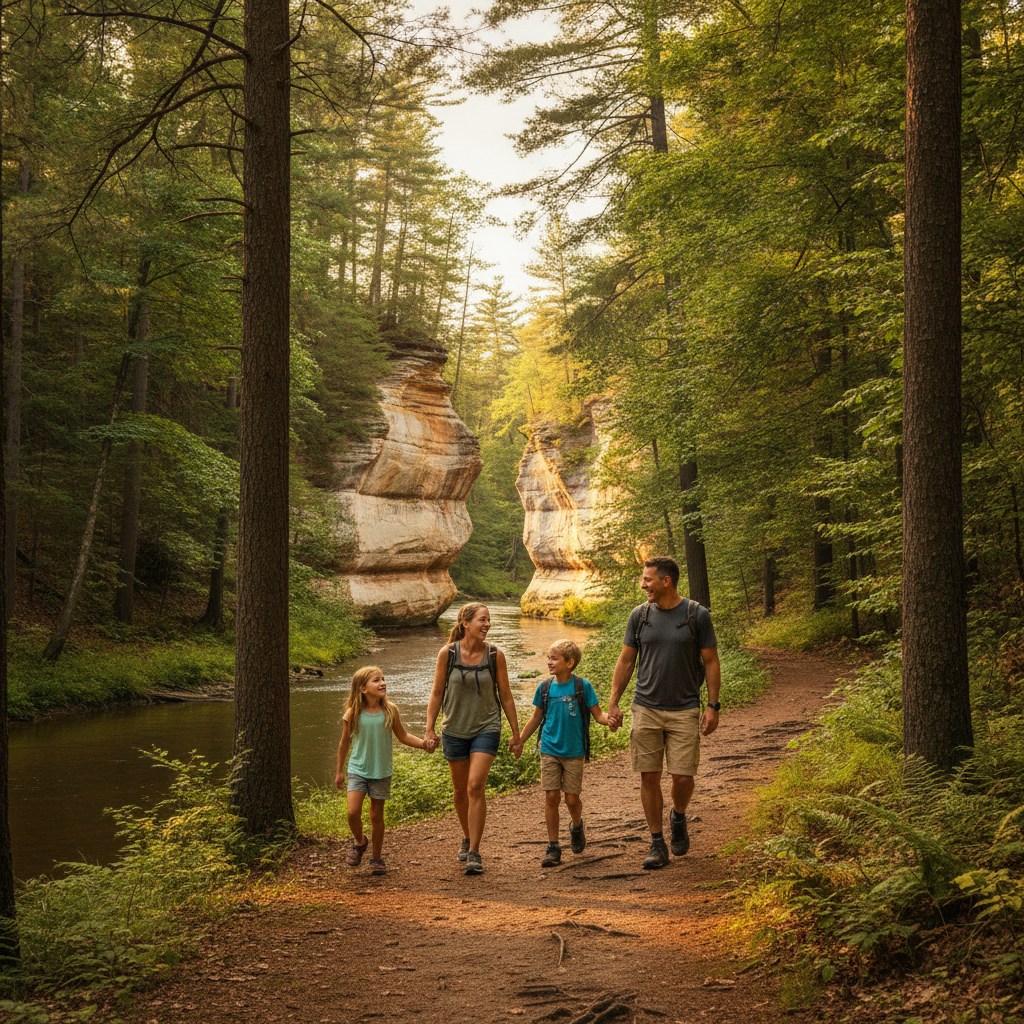
If you’ve ever told your kids, “We’re going to Wisconsin Dells,” you’ve already used the name that won—long before it was official. Here’s the twist: in 1856, the town was platted as **Kilbourn City**, named for railroad leader **Byron Kilbourn**… but by the time families were pouring in to see the dramatic sandstone gorge on the Wisconsin River, almost everyone was calling the place **“the Dells”** anyway.
Key takeaways
– In 1856, the town was officially named Kilbourn City after railroad leader Byron Kilbourn
– People mostly called the area the Dells because of the sandstone cliffs and narrow river gorge on the Wisconsin River
– The word Dells means a narrow river area with steep sides and big rock views
– The Dells name showed up long ago, even on maps in the 1700s (sometimes spelled Dalles)
– In 1931, the city officially changed its name to Wisconsin Dells because that is what visitors and locals already said
– The name change was not sudden; it was the paperwork catching up with the popular nickname
– Easy timeline to remember: 1856 Kilbourn City → many years of people saying the Dells → 1931 Wisconsin Dells
– You can still see the story today by looking for old signs or photos downtown and then visiting the river views that made the name famous
If you’re reading this in trip-planning mode, think of those takeaways as your “story plus route” in one place. You’ll have the dates, the meaning of the word Dells, and the simple reason the name changed without digging through a history book. And best of all, you can turn the timeline into something your family can spot with their own eyes.
A helpful way to use the story is to do it in two parts: first, find a quick indoor overview with photos or maps, then step outside for a short downtown walk and a river-view moment. That’s when the rename stops feeling like trivia and starts feeling like a real place you’re standing in. Keep that 1856 → 1931 arc in mind, and each stop becomes a “then” and “now” you can point to in real time.
So why did Kilbourn City finally become **Wisconsin Dells** in **1931**? Was it just a paperwork change—or the moment a railroad town leaned into its biggest “wow” feature and became a destination? Keep reading for the kid-friendly version you can share in the car, the quick timeline, and the simple “look for this” spots downtown and along the river that make the name-change story feel real in just one morning.
The 2-minute version you can tell in the car (or around the campfire)
In 1856, the town was officially laid out (that’s what “platted” means) and named Kilbourn City to honor Byron Kilbourn, a Wisconsin pioneer and railroad president. That detail comes straight from the Wisconsin History record, and it fits the era: many towns honored the people tied to growth and transportation. It was a practical name for a practical moment, when rail connections and new settlement patterns shaped what a place could become.
But the name people used on vacation didn’t come from a boardroom—it came from the view. Visitors kept talking about the Dells of the Wisconsin River, where the sandstone cliffs tighten into a narrow gorge and the scenery feels close enough to touch. Over time, “Wisconsin Dells” became the name used in conversation and trip planning, and in 1931 the town made it official by permanently changing its name, as noted by Britannica.
Here’s an accurate one-liner that works for kids, grandparents, and that friend who loves trivia: it was named for a railroad leader in 1856, but renamed in 1931 for the river scenery that made it famous. It’s short, but it points to the real shift: from a town identity tied to a person to a destination identity tied to a place you can see. And once you spot that river corridor, the “why” makes immediate sense.
A quick timeline you can actually remember
Long before anyone stamped a city name onto paperwork, the landscape had already earned a label. Early maps in the 1700s used “Dalles” for the gorge area—an older spelling that points to the same idea: a narrow, dramatic river corridor that stands out from everything around it. That early naming clue is part of the local history summary on Dells history, and it’s a helpful reminder that “the Dells” didn’t appear out of nowhere in 1931. The word was already attached to the scenery in people’s minds.
Then comes the official town name. In 1856, the community was platted and established as Kilbourn City, honoring Byron Kilbourn, as documented by the Wisconsin History record. For many years after, everyday usage drifted toward what visitors came to experience—the Dells of the Wisconsin River—and in 1931 the legal name changed to Wisconsin Dells, aligning official paperwork with common usage, as Britannica describes.
If you want the “stick in your head” version, keep it as a three-beat story. First: 1856, Kilbourn City. Middle: years of people saying “the Dells” because the river gorge was the memorable part. Last: 1931, Wisconsin Dells becomes the official name that matches what travelers already called it.
Why it was named Kilbourn City in the first place
It helps to picture the mid-1800s like a giant “where should we build next?” moment. Towns grew around transportation routes, and railroads were the difference between a place you passed through and a place you stopped in. In that world, naming a new town after a major figure wasn’t just flattery—it was a signal of connection and momentum, which is why honoring Byron Kilbourn made sense in 1856. You can see that origin clearly summarized in the Wisconsin History entry.
Now switch to how a vacationing family thinks. You don’t plan a weekend around a name on a charter document—you plan around what the kids will remember and what you’ll talk about afterward. That’s why the “then vs. now” difference matters: then, a developing town tied to rail-era growth; now, a destination tied to river scenery, downtown wandering, and the attractions that make Wisconsin Dells famous.
If you want a kid-friendly way to make that click, try this in the car: “If you named a town after its best feature, what would you call it?” Let the kids answer, then tell them Wisconsin Dells is the real-life version of that game. It’s history, but it feels like a story they’re part of.
What “the Dells” means (and how to appreciate it safely)
“Dells” (and the older spelling “Dalles”) refers to a narrow river corridor—often with steep sides—where the views feel big and close at the same time. In Wisconsin Dells, that meaning connects directly to the Wisconsin River and the sandstone formations that frame it, which the local overview on Dells history highlights as the scenic centerpiece that drew visitors. When a place has a feature that distinctive, it naturally becomes the shorthand name people use to describe it. And once it becomes the shorthand, it’s only a matter of time before the shorthand becomes the name.
This is also where your family’s timeline turns into something you can see and feel. Pick one signature viewpoint so everyone can look down the corridor, then, if it fits your trip, add an on-the-water perspective so the “narrow gorge” idea makes sense from inside the scene. Keep it simple and safe: wet rock can be slippery even when it looks dry, edges near water deserve extra attention, and kids should be close enough that you can reach them quickly. If you want the scenery to stay beautiful for the next family, stay on established paths, pack out trash, and leave rocks and plants where they are.
Why the rename happened (and why it wasn’t sudden)
Most place-name changes aren’t one dramatic moment—they’re a slow drift followed by an official decision. When everyday speech, business identity, and visitor expectations move away from the official name, towns often align the legal name with what people already say. That reduces confusion for maps, mail, and travel planning, and it strengthens recognition for visitors who just want to know they’re going to the right place. In other words, renaming is often about navigation and clarity as much as it is about branding.
In Wisconsin Dells, tourists commonly referred to the area by the scenic Dells of the Wisconsin River, and adopting “Wisconsin Dells” as the official town name helped promote it as a resort destination, according to Dells history. That makes the 1931 change feel less like a sudden marketing trick and more like the paperwork catching up to reality. As Britannica notes, the 1931 change reflected a name locals and tourists had already been using informally for many years. It’s the difference between inventing a nickname and finally admitting which nickname everyone actually uses.
How to spot the Kilbourn City story on today’s trip
The easiest way to experience the name-change story “on the ground” is a two-stop approach: get the overview indoors, then match names to places outdoors. Start with a public-facing history stop—think community museums, historical societies, or visitor centers—because they’re designed to give quick context with maps, photos, and short explanations. As you browse, watch for visual evidence of older naming conventions: historic postcards, antique storefront photos, or archival-style displays that still use “Kilbourn City.” Before you leave, ask a focused question that saves you time: Where can we walk to see the oldest streetscapes, rail-era history, or early tourism-era clues?
Next, take a short downtown walk and play “then vs. now” with your surroundings. When you see Wisconsin Dells on a modern sign, look nearby for older hints in architecture, street layouts, and window displays that show historic photos. For families and groups, a simple scavenger list keeps everyone engaged without turning the morning into homework: one historic photo display, one downtown building that looks pre-resort era, and one river viewpoint that explains why “the Dells” became the name people remembered. Take photos of details rather than removing souvenirs from nature or public spaces—your camera is the best way to collect history responsibly.
If you’re camping, this is the kind of outing that fits a vacation rhythm instead of fighting it. Do the indoor-and-downtown pieces in the morning while everyone’s fresh, then save the river scenery and the big attractions for later in the day. If you’re staying at Bonanza Camping Resort, you can keep driving to a minimum by clustering stops and returning “back to the woods” between adventures. A short loop like this can make the name-change story feel real without taking over your whole day.
In the end, the Kilbourn City-to–Wisconsin Dells story is a reminder that the best place names aren’t always invented—they’re earned. Once you’ve stood near the river and watched the sandstone walls tighten into that famous corridor, “the Dells” stops sounding like a nickname and starts feeling like the only name that fits. It’s a simple timeline, but it points to something bigger: this community chose to be known for the experience that keeps bringing people back.
If you’re ready to turn that history into a memory-making weekend, make Bonanza Camping Resort your home base. You’ll be close to the river views, downtown walks, boat tours, and waterparks—then you can come “back to the woods” for a relaxing escape, a safe & clean stay, and classic campfire time under the pines. Book your site or cabin at Bonanza and let your next Wisconsin Dells story end the best way: together, outdoors, and already planning the return trip.
Frequently Asked Questions
Q: What was Wisconsin Dells called before it was Wisconsin Dells?
A: The town was officially platted in 1856 as Kilbourn City, named to honor Byron Kilbourn, a railroad leader, as documented by the Wisconsin Historical Society’s Wisconsin History record.
Q: Why was it named Kilbourn City in the first place?
A: In the mid-1800s, towns often took the names of influential people connected to growth and transportation, and naming the new community “Kilbourn City” signaled its railroad-era ambitions and connections in a practical, development-focused time.
Q: When did Kilbourn City become Wisconsin Dells?
A: The permanent legal name change to Wisconsin Dells happened in 1931, aligning official paperwork with the name many visitors and locals were already using, as noted by Britannica.
Q: Was the 1931 rename a sudden marketing move, or something that had been building for years?
A: It wasn’t a brand-new nickname invented overnight; “the Dells” had already become the common, experience-based way people referred to the area, and 1931 was when the city made official what everyday speech, travel plans, and tourism conversation had been leaning toward for a long time.
Q: What does “Dells” actually mean in Wisconsin Dells?
A: “Dells” (and the older spelling “Dalles” seen on early maps) refers to a narrow, dramatic river corridor, and in this region it connects directly to the Wisconsin River’s sandstone formations—the scenery that visitors remembered and talked about most.
Q: Who was Byron Kilbourn?
A: Byron Kilbourn was a Wisconsin pioneer and railroad president, and the town’s 1856 name “Kilbourn City” was chosen to honor him, a detail summarized in the Wisconsin History record from the Wisconsin Historical Society.
Q: What’s the simplest, kid-friendly version of the whole story?
A: In 1856 the town got an official grown-up name—Kilbourn City—after a railroad leader, but people kept calling it “the Dells” because the river gorge was the unforgettable part, and in 1931 the official name finally matched what everyone already said: Wisconsin Dells.
Q: What’s an accurate one-liner I can tell friends about the name change?
A: “It was named Kilbourn City for a railroad leader in 1856, but it was renamed Wisconsin Dells in 1931 for the river scenery that made it famous.”
Q: Why did “Wisconsin Dells” win out over “Kilbourn City”?
A: “Wisconsin Dells” tells you what the place feels like and what you’ll see—the river corridor and its dramatic formations—while “Kilbourn City” points to a person many travelers don’t know, so the scenery-based name was easier to remember, share, and connect to the destination experience.
Q: Is it true the “Dells” name is older than the city itself?
A: Yes—local history summaries note that maps as early as the 1700s used “Dalles” for the gorge area, which helps explain why “the Dells” didn’t need to be invented in 1931; the landscape had been associated with that name long before the town’s official 1856 platting.
Q: Did the rename change the actual place, or just the paperwork and identity?
A: The river, rocks, and streets didn’t change, but the public-facing story did: making “Wisconsin Dells” official helped the town present itself around its most distinctive feature—the river scenery—so the name, the visitor expectations, and the destination identity all matched more clearly.
Q: Are there still traces of “Kilbourn City” you can spot today?<