
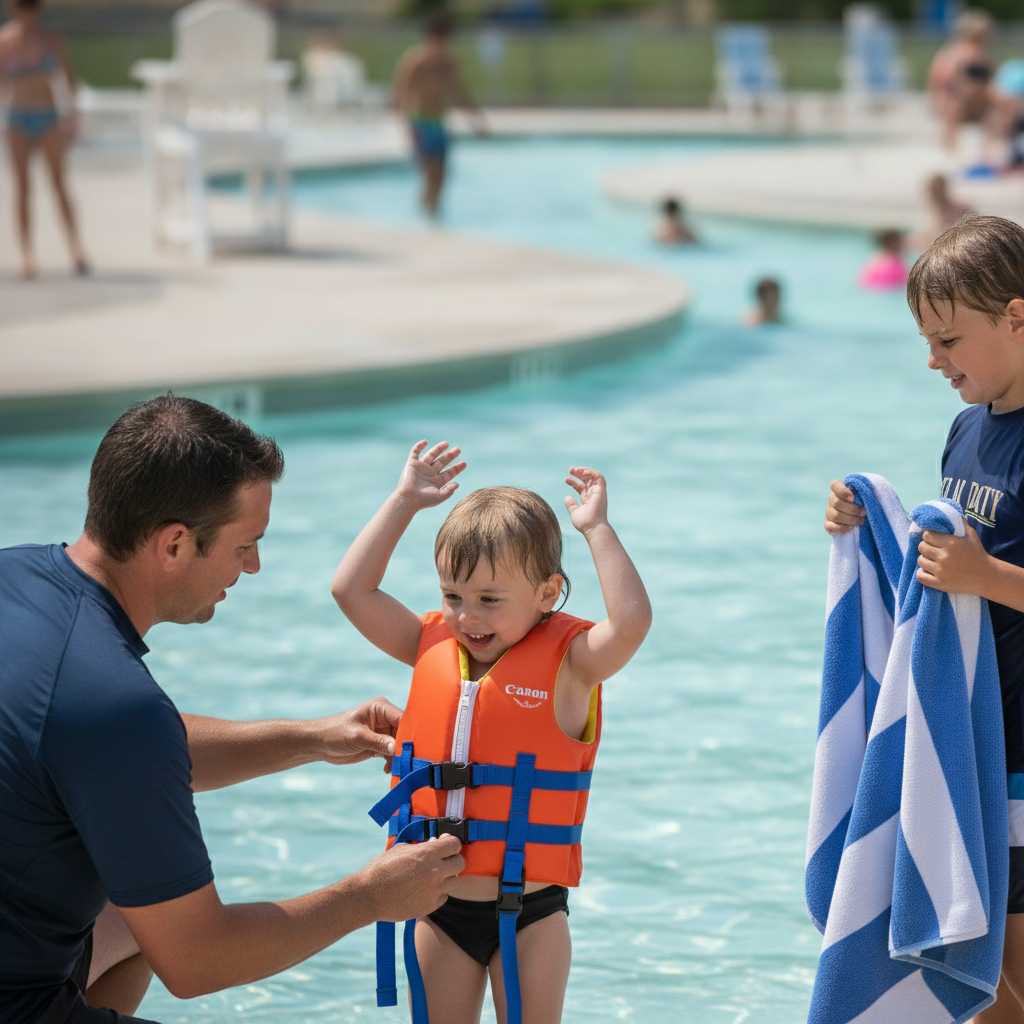
Wave pools, lazy rivers, splash zones… and one question that can turn a fun Wisconsin Dells day into a stressful one fast: “Do my kids need life jackets here—and where do we get them?” If you’re staying at Bonanza Camping Resort and planning a waterpark day, this guide is built to help you walk in confident: when life jackets are **required vs. recommended**, whether you can **bring your own**, and where **free loaner** vests are usually placed so you can grab the right size without wandering the whole park.
Key Takeaways
– Check the rules at your waterpark before you go. Some parks require life jackets for kids under a certain height or for non-swimmers.
– Use a U.S. Coast Guard–approved life jacket. Look for the sewn-in label with the approval words and the weight range.
– Pick the right kind of vest for a waterpark. Foam life jackets are usually best because they float right away.
– Size by weight, not by age. If your child is between sizes, a snug fit is safer than a loose fit.
– Do a quick fit test at the rack. Zip and buckle it, tighten straps, then lift at the shoulders; if it slides up near the ears or chin, it is too loose.
– Get life jackets first, then pick rides. Free loaner sizes can run out fast, especially kid sizes.
– Look for free loaner racks near wave pools, lazy rivers, and main entrances to the water areas.
– Life jackets help, but adults still need to stay close. In wave pools and crowds, stay within arm’s reach of small kids and non-swimmers.
– Make a simple family plan. Choose a meeting spot, pick which rides are for non-swimmers, and take breaks so kids do not get too tired.
– Pack smart from the campground. Bring a mesh bag for wet gear, a dry bag for phones and keys, and consider bringing your own approved life jacket as a backup.
If you only do three things, make them these: check the park’s posted rules, fit the vest snugly, and stay close in the water. Those steps work whether you are traveling with toddlers, a big family with mixed swim skills, or grandparents helping with the grandkids. They also reduce the most common stress point: realizing you need a life jacket after you are already standing at the wave pool with a crowd behind you.
This guide is meant to be simple on purpose, because waterpark days move fast. A good plan does not need a spreadsheet; it needs a routine your group can repeat. Policies can change, so always follow posted signs and lifeguards, even if you read something different online earlier.
Because every park handles this a little differently—and busy days can wipe out popular kid sizes—we’ll also cover what “**U.S. Coast Guard–approved**” actually means, a quick 30-second fit check you can do at the rack, and a simple “get vests first, then pick rides” routine that keeps your group together. Policies can change, so always follow posted signs and lifeguards—but if you want the low-stress plan before you leave the campground, keep reading.
What “U.S. Coast Guard–approved” actually means (in plain language)
A U.S. Coast Guard–approved life jacket is not just something that looks like it floats or has bright colors. It is a personal flotation device (PFD) that meets a specific safety standard for flotation and design. The easiest way to confirm it is to check for the sewn-in label inside the vest, because that label usually shows the approval wording and a weight range. If you cannot find that label, do not assume it counts, especially if the park is strict about what is allowed.
For a waterpark day in Wisconsin Dells, the most practical choice is usually an inherently buoyant foam life jacket. Foam vests float right away, which is exactly what you want when kids are running from splash zone to lazy river without stopping to “get ready.” Inflatable belts and inflatable vests are often a poor match for waterparks because they rely on correct activation and can be punctured, used incorrectly, or simply forgotten in the excitement. If you are bringing your own vest, choose one with secure closures, like a zipper plus one or more buckles, so it stays in place when kids jump, bounce, and get pushed by waves.
How to get the right fit fast (kids and adults) without second-guessing
Start with sizing by weight, then confirm by fit. Weight-based sizing is usually printed right on the life jacket label, which is why checking the sewn-in tag matters more than guessing by age or shirt size. If your child is between sizes, a snugger fit is usually safer than a loose one. A loose vest can ride up, shift sideways, or feel “fine” until the moment a child hits deeper water and the vest floats toward their ears.
Do a quick, 30-second fit check at the rack before you ever step into a wave pool or lazy river. Zip it fully, buckle every buckle, and tighten straps until the vest is snug (not painful). Then do the gentle lift test: hold the shoulder area and lift slightly; if the jacket slides up toward the ears or chin, it is too loose and should be tightened or swapped for a smaller size. Re-check fit after bathroom breaks and re-entry, because wet straps can loosen, and kids sometimes unclip buckles when adults are distracted.
Where free loaner life jackets are usually found (and how to avoid the “no sizes left” moment)
In many waterparks, complimentary life jackets are offered on first-come, first-served racks. That means you typically do not reserve one ahead of time, and there is no guarantee that popular child sizes will still be there at peak hours. Families often feel fine at the entrance, then hit stress later when they finally reach the wave pool and realize they still need a vest. The simplest fix is to make life jackets your first stop, not your “we will grab one later” task.
When you are looking for free loaners, start where demand is highest. Loaner racks are commonly placed near wave pools, lazy rivers, and main entry points to the indoor or outdoor water areas, with occasional racks near kiddie/play areas. Arrive earlier on busy days if you rely on loaners, because child sizes tend to go first and big groups often sweep through the same stations. If your crew moves between indoor and outdoor zones, plan for carrying or swapping vests, and consider bringing a small mesh bag so wet gear can drip without soaking your dry items.
Life jackets help, but they do not replace supervision (especially in wave pools)
A life jacket is one layer of protection, not a substitute for an adult staying engaged. Wave pools and crowded play structures are where kids get bumped, spun around, and separated quickly, even when they are wearing a properly fitted vest. The goal is not to create fear; it is to avoid the “I looked away for a second” moment that every parent worries about. Staying close is what turns a busy water area into something you can actually enjoy.
For small kids and non-swimmers, use touch supervision in the water. That means you are close enough to reach them immediately, not watching from a chair while they drift into deeper water. Before anyone gets wet, set a simple family plan that kids can repeat: a meeting spot, which rides are for non-swimmers, and what to do if separated. Build in breaks, too, because tired kids are the ones most likely to loosen straps, unclip buckles, or make impulsive choices when the wave pool is loud and exciting.
Park-by-park guidance for Wisconsin Dells (rules, loaners, and what to do first)
At Kalahari Resorts & Conventions in Wisconsin Dells, the rules are clear enough to plan around before you leave Bonanza Camping Resort. Kalahari states that a U.S. Coast Guard–approved life jacket is required for all guests under 48 inches tall and for all non-swimmers, and they also note life jackets are recommended for weak swimmers, with additional requirements called out for attractions such as the lazy river and wave pool. You can verify the exact wording on their Kalahari ride safety page. Kalahari also says complimentary life jackets are available on a first-come, first-served basis in both the indoor and outdoor waterparks, and they encourage guests to bring their own properly fitting, U.S. Coast Guard–approved life vest, which can be a big stress reducer if your child fits “in between” sizes.
Zehnder’s Splash Village in Wisconsin Dells notes that life jackets are available free of charge on-site, and they also state that inner tubes and towels are provided at no additional charge, which can lighten your packing list for the day. Those details are listed on their Splash Village safety page. They recommend life jackets for children under 42 inches and inexperienced swimmers, which is a helpful guideline if you are deciding what your child should wear even when it is not strictly required. If you want your day to feel easy, treat the recommendation like a must-do for wave pools and any area where your child cannot stand comfortably.
Island Waterpark in Wisconsin Dells states that guests under 48 inches tall or weak or non-swimmers should wear U.S. Coast Guard–approved life jackets where appropriate, and they note that life jackets are provided at the park free of charge. You can read those policies on the Island rules FAQ page. They also note that in the wave pool, children 42 inches and under are suggested to wear life jackets and must be accompanied by an adult, which is a reminder to plan who is in the water and who is handling towels and snacks. If you are coordinating multiple kids, decide your “water adult” first, then get everyone fitted, and then pick rides so you are not splitting up while trying to solve safety logistics.
What to pack from Bonanza Camping Resort (so wet gear does not take over your day)
If you are camping at Bonanza Camping Resort, your waterpark day includes the before-and-after moments that are easy to forget. Wet swimsuits, damp towels, and tired kids can turn the ride back into a messy scramble if everything is stuffed into one bag. Pack a mesh bag for wet items and a separate dry bag for essentials like phones, keys, and medications, so you are not digging through wet fabric for your car key. A plastic tote or bin for the ride back can keep your vehicle cleaner and make unloading at your site faster.
If your child must wear a life jacket, consider bringing a properly sized backup, U.S. Coast Guard–approved foam vest from home. It reduces stress if loaner sizes are limited and keeps fit consistent, because you already know which straps sit comfortably and which buckles your child can manage. After the park, rinse and dry personal life jackets when you can, because chlorine and sun can degrade materials over time; drying in shade and avoiding prolonged heat helps preserve foam and straps. Before you leave the campground, do a quick gear check so you are not troubleshooting a broken buckle at the rack while everyone else is already in line for the lazy river.
A waterpark day in the Dells is a whole lot more fun when you’re not solving safety questions on the fly. Remember the simple routine: check for the U.S. Coast Guard–approved label, do the quick lift test, grab loaner vests early (before the popular kid sizes disappear), and keep close supervision where the energy—and waves—are biggest. Those few minutes up front can be the difference between a smooth day and a backtracking, towel-juggling scramble. When you’re ready to turn the slides and splash zones into a full Wisconsin Dells getaway, make Bonanza Camping Resort your home base and book your stay so you can spend less time driving and more time making memories in a north woods setting that feels like a real reset after the waterpark.
Frequently Asked Questions
Q: Are life jackets free to borrow at Wisconsin Dells waterparks?
A: Many major Dells-area waterparks offer complimentary (free) U.S. Coast Guard–approved life jackets on a first-come, first-served basis, including Kalahari (indoor and outdoor), Zehnder’s Splash Village (free of charge), and Island Waterpark (provided free of charge), but supplies and exact procedures can change, so always confirm with posted signs and lifeguards the day you visit.
Q: Where do I usually find the free loaner life jacket racks once we’re inside?
A: In many waterparks, the free life jacket racks are typically placed near the highest-demand water areas like the wave pool and lazy river and sometimes near main transition points between indoor and outdoor areas, so a good plan is to locate a rack right after you enter the waterpark area (before you commit to rides) and fit everyone who needs one immediately.
Q: Do I need to reserve a life jacket ahead of time?
A: At many Dells waterparks, complimentary life jackets are not reserved and are instead offered first-come, first-served from self-serve racks, which means arriving earlier can make it easier to find popular child sizes on busy days.
Q: What does “U.S. Coast Guard–approved” mean in plain language?
A: “U.S. Coast Guard–approved” means the life jacket meets a specific safety standard for flotation and design, and the simplest way to verify it is to look for the sewn-in label inside the vest that states the approval and shows the intended size/weight range.
Q: Can we bring our own life jacket from home?
A: Many parks allow guests to bring their own properly fitting, U.S. Coast Guard–approved life jacket, and Kalahari specifically encourages bringing your own if you have a child who fits “in between” sizes, but it’s still important to follow attraction-specific rules and lifeguard instructions for where life jackets are allowed or required.
Q: Are inflatable swim belts or inflatable vests okay for a waterpark day?
A: Inflatable devices are often a poor match for splash-heavy waterpark environments because they rely on correct activation and can be used incorrectly or damaged, so a foam (inherently buoyant) U.S. Coast Guard–approved life jacket with secure closures is usually the more practical and dependable choice.
Q: How do I get the right life jacket size quickly for my child?
A: Start by matching your child’s weight to the size range printed on the sewn-in label, then adjust the straps so the vest is snug and do a quick “lift test” by gently lifting at the shoulders—if it rides up toward the ears or chin, it’s too loose and should be tightened or swapped for a smaller size.
Q: Do adults use the free life jackets too, or are they only for kids?
A: Adults and teens who are weak swimmers can often use the complimentary life jackets as well (when available), and even confident swimmers may choose one for extra comfort in busy wave pools or lazy rivers, but the key is wearing the correct size and following any attraction-specific restrictions.
Q: When are life jackets required vs. just recommended at Kalahari?
A: Kalahari states that a U.S. Coast Guard–approved life jacket is required for all guests under 48 inches tall and for all non-swimmers, and they also note life jackets are recommended for weak swimmers, with additional requirements called out for specific attractions