
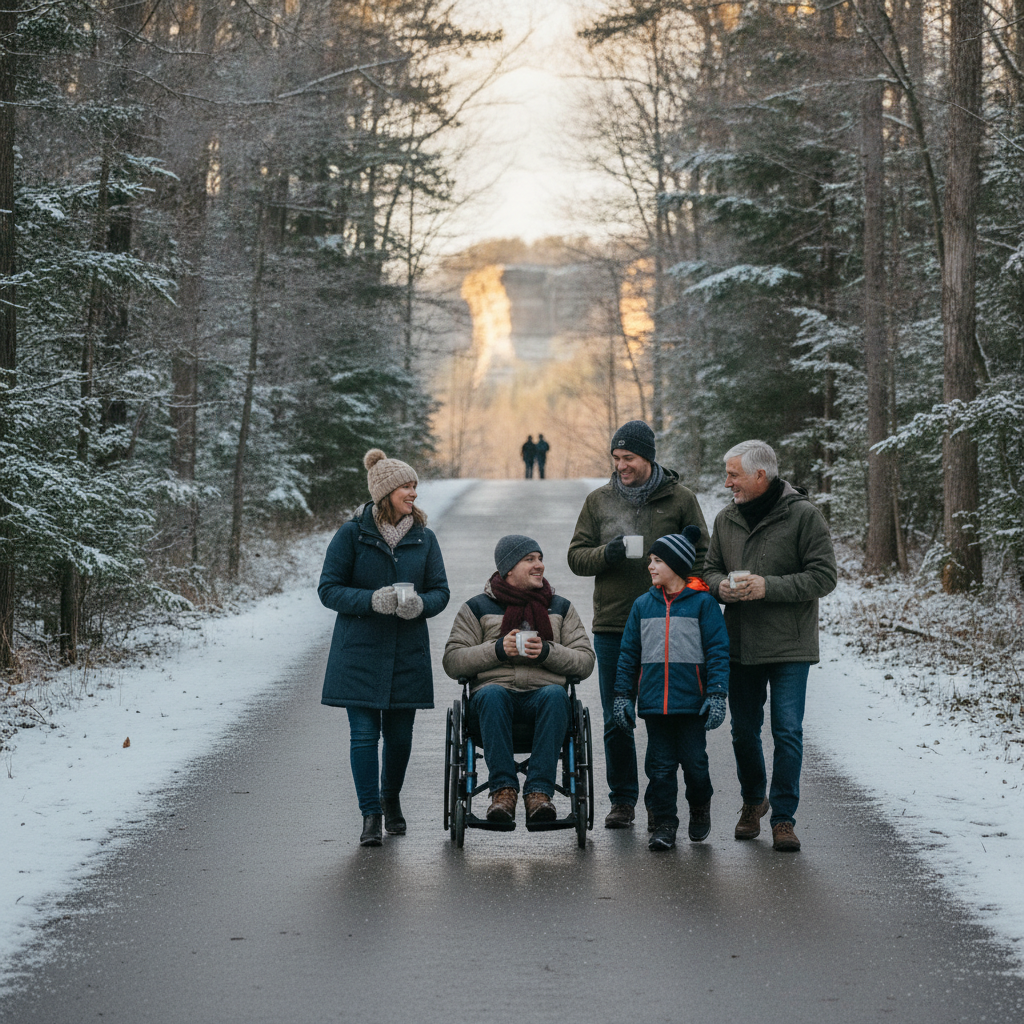
Winter in the Wisconsin Dells can be magical—until a “quick stop” turns into a surprise curb, an icy ramp, or a restroom that’s nowhere near step-free. Summer brings its own curveballs: hot pavement, long lines, splash zones, and “accessible” paths that feel more like an obstacle course with a stroller and a wheelchair in the mix. If you’re planning a Bonanza Camping Resort stay and you want every person in your crew to actually do the fun (not just watch from the sidelines), this seasonal guide is built for you.
Key takeaways
– Pick one main attraction, add one easy stop, and keep a Plan B (backup) in case weather or crowds change.
– Wheelchair-friendly means the whole route works: parking to door, door to fun, fun to restroom, and back again.
– Don’t trust a simple yes we’re accessible. Call ahead and ask about the exact path you will use.
– Ask these 4 quick questions first:
– Transfer: Can you stay in the wheelchair, or do you have to move to a seat?
– Exposure: Is it mostly indoor or outdoor, and how long are you outside between places?
– Terrain: Is it smooth and firm, or is there gravel, steep hills, or narrow spots?
– Duration: Is it a short outing or a long day with lots of rolling and waiting?
– Parking and sidewalks can be the hardest part in the Dells. Arrive early and ask about a close drop-off spot.
– Winter tip: ice and snow can block the real route. Ask if that exact route is plowed, wide, and not slippery.
– Summer tip: heat, hot pavement, and long lines cause fast fatigue. Go early, take shade breaks, and drink water often.
– Waterparks can work, but ask about zero-entry pools, pool lifts, accessible locker rooms, and trained staff.
– Pack a small mobility kit in the car (towel, rain cover, gloves, basic tools, tire pump) for surprise bumps and wet areas.
– For the campground or cabin, confirm firm parking, step-free routes, and bathrooms/showers you can actually use..
Use the takeaways like a “trip filter” before you ever leave Bonanza Camping Resort. When you decide on transfer needs, indoor vs. outdoor exposure, terrain, and how long the outing will really take, your plan starts to feel predictable. And predictable is what turns Wisconsin Dells from stressful to memory-making when a wheelchair is part of the crew.
If you’re planning with kids, this is also how you protect the fun. A clear Plan A (main attraction), a low-effort add-on (easy stop), and a Plan B (backup) keeps the day from unraveling when lines spike or weather shifts. It’s a simple way to make sure the whole group gets the same story at the end of the day: we did it together.
Inside, you’ll find wheelchair-friendly winter and summer attraction ideas near the Dells—plus the simple, repeatable questions that cut through vague “yes, we’re accessible” answers. Think: step-free route from parking to entrance, surfaces you can roll on, restroom access that’s practical in real life, and which experiences are no-transfer vs. transfer-required. Keep reading for low-stress picks like indoor hands-on attractions, paved scenic routes, and year-round favorites—along with what to pack and how to plan around snow, heat, and crowds so your trip stays smooth from the campground to the can’t-miss moments.
Quick start: how to use this guide without overthinking it
If you’re traveling with kids, grandparents, friends, or a whole multi-gen crew, the goal isn’t to find the one perfect “fully accessible” attraction. The real win is picking the right-fit outing for your chair, your energy level, and your season—so nobody is stuck outside a doorway while everyone else goes in. Use this guide like a menu: choose one main attraction, pair it with one easy stop, and keep a Plan B ready in case weather or crowds change the math.
When this post says wheelchair-friendly, it means the practical stuff that decides whether your day feels smooth or stressful: a step-free route from parking to the entrance, firm surfaces you can roll on, accessible restrooms you can actually use, and a realistic way to join the experience (not just enter the building). Many venues are partly accessible, and that’s normal in a destination like Wisconsin Dells. Your job is simply to spot the “good fit” activities for your crew, then confirm the exact route you’ll use.
At-a-glance labels you’ll see in the attraction sections:
– Transfer: no-transfer friendly or transfer likely
– Setting: indoor, outdoor, or mixed
– Surfaces: smooth surfaces or mixed terrain
– Pace: short & easy or longer outing
The no-surprises accessibility framework (the 5-minute check that saves a whole day)
A lot of places will answer “Yes, we’re accessible,” and still leave you staring at a steep portable ramp or a restroom that requires going outside in February. The best way to plan wheelchair-friendly Wisconsin Dells attractions is to ask about the path of travel like you’re tracing a line on a map: parking space to door, door to main experience, main experience to restroom, and back again. You’re not being picky—you’re preventing the kind of “we can’t actually do this” moment that turns everyone’s mood fast, especially with kids.
Here’s a call-ahead script you can keep in your notes app and use for any Wisconsin Dells attraction, museum, waterpark, boat tour, theater, or night walk. Read it like a checklist and write down the answers, because details blur when you’re trying to pack snacks, manage meds, and keep a schedule. When a staff member answers clearly, you can feel your whole day loosen up before you even arrive.
Call-ahead questions that get real answers:
– Parking to entrance
– Is there a step-free route from accessible parking to the main entrance, and is it the route you’d recommend guests use?
– Are ramps permanent or portable, and how steep do they feel in practice?
– What is the narrowest doorway or pinch point on the main route?
– Any gravel stretches, threshold lips, or steep grades you’d warn a wheelchair user about?
– Restroom reality
– Is the accessible restroom in the same building as the main experience, or do you have to go outside to reach it?
– Is there enough turning space, are grab bars positioned well, and are the sink and soap reachable from a seated position?
– Experience-specific access
– Can a wheelchair user reach the main viewing areas and interactive elements from seated height?
– For rides or tours, what are the exact boarding steps, and how long do you have to stay seated without getting up?
Choosing the right outing fast: the simple decision filter
Once you have answers, you can sort attractions into a “yes today” or “not today” pile without feeling like you need a full research project. This is especially helpful for families who want kids to have big fun while the wheelchair user has full participation, and it’s just as useful for couples who want an adventure-forward weekend without accessibility being an afterthought. Think of it as matching the day’s conditions to your most important needs so your crew stays together.
Start with these four filters, in this order, because they tend to decide whether an outing feels doable. When you ask them first, you stop wasting time on attractions that will never fit your needs that day. And when the answers sound “mostly” or “probably,” that’s your cue to ask one more detail about the exact route you’ll use.
– Transfer: no-transfer friendly vs. transfer required
– Exposure: indoor vs. outdoor exposure (and how long you’ll be outside between parking, entry, and restrooms)
– Terrain: smooth surfaces vs. mixed terrain (gravel, uneven boards, steep grades, narrow pathways)
– Duration: short vs. long (fatigue, temperature, and restroom timing)
If you’re traveling with a mixed-mobility group, build the day like a balanced plate. Pair one higher-effort experience (like a larger attraction with longer walking/rolling distances) with one low-effort stop (like a movie, an indoor exhibit, or a dinner show). That way you still get the “we did something big” feeling, without anyone ending the day sore, cold, overheated, or simply done.
Getting around Wisconsin Dells: parking, drop-off, and the path-of-travel reality
In the Dells, accessibility often breaks down between the car and the door. A venue can have a ramp and accessible restrooms and still be frustrating if the accessible parking is far away, the curb cuts are awkward, or the sidewalk is narrowed by snowbanks. Planning for that gap is the difference between “We made it!” and “We’re turning around.”
Your lowest-stress strategy is to arrive earlier than you think you need to, especially for popular attractions and summer weekends. Accessible parking can fill quickly, and when that happens, the rolling distance can jump from a short hop to a long trek in heat or cold. Ask about accessible drop-off so you can unload the wheelchair user and kids at the closest safe entrance, then have a companion park after.
Keep a small mobility kit in the vehicle, because the Dells is a place where “almost smooth” surfaces happen a lot. A basic tire pump, simple tools that fit your chair, a poncho or rain cover, and a small towel for wet push rims can save your day. If you already use a compact threshold aid or small ramp comfortably, it can be handy for unexpected little lips, but it’s still best to choose venues where the main path of travel is truly step-free.
Seasonal comfort and safety: winter snow and summer heat (so accessible stays actually usable)
In winter, your biggest enemy isn’t the attraction—it’s the hidden patch of ice between accessible parking and the entrance. Before you commit to a plan, confirm snow removal on the exact route you will actually use, not the “main sidewalk” someone mentions offhand. Plowed paths can still be narrowed by snowbanks, and that can force you into awkward angles that make pushing harder and transfers slower.
Pack for traction and control, not just warmth. Grippy gloves help with pushing, a lap blanket helps when you’re sitting still in lines, and hand warmers can keep hands functional for brakes and rims. A small towel is an underrated winter tool because dry hands and dry push rims improve control when everything else is wet and cold. If you use a power wheelchair, remember cold reduces battery efficiency, so charge more often and keep your phone and power bank warm where you can actually reach them.
In summer, heat and water turn “simple” outings into fatigue fast. Plan outdoor activities earlier or later in the day, build in shade breaks, and drink regularly even if you don’t feel thirsty yet. Hot pavement can raise discomfort quickly, especially if you’re rolling longer distances from parking, so it helps to treat sun protection as part of accessibility: hats, sunscreen, and UV sleeves can reduce fatigue and skin irritation during long outdoor waits.
Water brings its own safety checklist. Wet tile, splash zones, and boat docks can be slick, so slow down, use handrails where available, and keep a dry cloth handy for push rims. If you’re doing waterpark or pool time, non-slip water shoes and a quick-dry towel can make wet transfers safer and less stressful for everyone.
Staying near Bonanza Camping Resort: the campground accessibility checklist you’ll actually use
A great day in Wisconsin Dells starts with a morning that isn’t already exhausting. When you’re booking a campsite or cabin near the Dells (including when you’re using Bonanza Camping Resort as your base), ask for the access details that affect real life: parking firmness, step-free routes, and bathhouse practicality. You’re not asking for perfection—you’re asking for predictability.
Start with arrival and surfaces, because that’s where “technically accessible” can still feel rough. Ask if there’s a firm, level parking surface next to the site or cabin, and whether the route from parking to the door or pad is step-free and not gravel-heavy. If you’re picturing a family dinner outside, also ask whether the picnic table and fire ring have space to approach from a wheelchair without needing to drag furniture around.
Then ask bathhouse and cabin questions like a person who’s actually going to use them after a long day. For bathhouses, confirm step-free entry, a wide doorway, enough turning space, and whether a roll-in shower setup is available if that matters for your group. Ask if there’s a shower bench or if you should bring a portable one, and whether the water controls are reachable and easy to operate from a seated position. For cabins, ask about ramp slope and landing space, bed height for transfers, and whether there’s clear space beside the bed to position the chair.
Also ask for the “make the whole trip easier” extras: a quieter location close to bathhouses and main amenities to reduce rolling distance, especially in extreme weather. And because Wisconsin weather can turn quickly, ask where the nearest severe weather shelter or main office is located, plus what the night-time contact process is if you need help.
Winter picks near Wisconsin Dells: low-surprise favorites plus adventure options
Winter is where indoor, step-free, hands-on attractions really shine, especially for families who want everyone participating instead of splitting up. Your best winter days often look like this: one warm indoor anchor experience, one easy meal or show, then back to your cozy base at the resort. That rhythm keeps kids happy and keeps rolling distances and exposure time manageable.
Use the access labels below to choose quickly, then use the call-ahead script to confirm details that matter to your specific chair and needs. If snow is falling or sidewalks are narrowed, you’ll be glad you already have an indoor backup on your short list. The goal is that “we all did it” feeling, even when winter tries to throw a curveball.
Tommy Bartlett Exploratory (open winter and summer)
– Good fit: families, groups, rainy/snowy days
– Labels: transfer no-transfer friendly (confirm exhibit reach); setting indoor; surfaces smooth; pace short & easy to longer outing depending on pace
– Access notes: This is an indoor, hands-on science and space attraction with an authentic Mir module, which makes it a strong winter choice when you want a big “wow” without weather exposure. Because hands-on exhibits vary, the key is whether interactive elements are reachable from seated height and whether any tight exhibit spaces create pinch points.
– Call-ahead questions: Are all main galleries step-free, and are there any narrow doorways or tight turns? Is the accessible restroom in the same building and easy to reach from the main exhibit areas?
– Plan B: If you want an even lower-effort indoor option afterward, a movie can keep the day smooth without more transfers.
Year-round indoor waterpark day: Wilderness Resort and Klondike Kavern
– Good fit: families, mixed-age groups, winter “we need water fun” days
– Labels: transfer mixed (often transfer likely for some features); setting indoor/mixed; surfaces smooth but wet/slippery; pace longer outing
– Access notes: A year-round indoor waterpark can feel like summer in the middle of winter, but accessibility depends on the specific entrances, locker rooms, and features. Ask about zero-entry pools, pool lifts, and accessible locker rooms, and don’t be shy about asking whether staff are trained to operate lifts and what the process looks like.
– Call-ahead questions: Where is the step-free entrance from accessible parking or drop-off, and how far is it? Do you have a pool lift, and is it available during all open hours? What are the wet-surface traction tips you recommend for wheelchair users?
– Plan B: If the waterpark feels like too much that day, choose a warm indoor attraction or a live show where everyone can stay together.
Dinner shows and theaters: Dells Dinner Adventures or Legacy Dinner Theater, plus movie night
– Good fit: families, retirees, couples, groups who want a no-weather plan
– Labels: transfer no-transfer friendly; setting indoor; surfaces smooth; pace short & easy
– Access notes: A dinner show is one of the easiest ways to keep everyone included because you’re not constantly moving between spaces. Accessibility varies by venue, so focus on seating access, restroom proximity, and whether there are steps anywhere between entry, dining, and the show.
– Call-ahead questions: Is there step-free entry from accessible parking or a drop-off point? Where are accessible seats located, and is there space for a wheelchair to park without blocking aisles? Is the restroom on the same level?
– Plan B: If showtimes don’t work, a movie at AMC Classic Desert Star 15 can be a simple, predictable indoor alternative.
Winter adventure options: Cascade Mountain and Christmas Mountain Village
– Good fit: adventurous families, couples, groups who want winter sports energy
– Labels: transfer likely; setting outdoor; surfaces mixed; pace longer outing
– Access notes: Downhill skiing, snowboarding, and tubing can be possible with the right setup, but accessibility varies widely depending on lift systems, transfers, and whether adaptive programs or assistance are available. The best winter sports days come from knowing the exact sequence ahead of time: where you check in, how gear fitting works, and what loading assistance looks like when it’s cold and busy.
– Call-ahead questions: Can you describe the step-by-step process from parking to check-in to gear fitting to the hill? Are there indoor warm-up areas close to the accessible route? What assistance is available for transfers and loading?
– Plan B: If conditions are icy or winds are high, switch to an indoor attraction so nobody is stuck outside too long.
Summer picks near Wisconsin Dells: smooth paths, water fun, and low-stress classics
Summer is when Wisconsin Dells feels like a highlight reel—waterparks, scenic views, family photo ops, and that “we’re doing it” energy from morning to night. It’s also when long lines and hot pavement can turn a simple outing into a marathon, especially if your group includes kids and a wheelchair user. Your best summer plan is to build around timing: arrive early, take shade breaks, and choose experiences where the path of travel is smooth and the restrooms are easy to reach.
Think in pairs. Do one big outdoor activity early, then choose an indoor stop during peak heat, then come back out for an evening experience if everyone still has energy. That pacing keeps the fun high and the fatigue low. It also keeps the wheelchair user from having to “push through” discomfort just to keep the group moving.
Mirror Lake State Park (near the Dells): trail, pier, picnic vibes
– Good fit: families, retirees, groups who want nature without rough terrain
– Labels: transfer no-transfer friendly; setting outdoor; surfaces mixed to smooth (confirm); pace short & easy
– Access notes: Mirror Lake State Park is often chosen for accessible-friendly nature time, including a wheelchair-friendly trail, fishing pier, and picnic areas. Because surface conditions can change with weather and maintenance, the smartest move is to ask the park office about the firmest route and whether any grades feel steep in practice.
– Call-ahead questions: Which route from parking to trailhead is most step-free and firm? Are there any gravel stretches, steep hills, or narrow pinch points you’d warn a wheelchair user about? Where is the closest accessible restroom to the picnic area or pier?
– Plan B: If it’s too hot or storms roll in, switch to an indoor attraction with predictable climate control.
If you’re exploring Wisconsin state parks more broadly, the Wisconsin DNR system may offer beach access mats, beach wheelchairs, adaptive kayaks, accessible fishing piers, and accessible campsites, and you can preview options through Wisconsin DNR access. This is a great way to plan a nature day that still feels comfortable and doable, especially if your group wants a mix of water views and easy rolling surfaces. It also helps to ask what’s available that specific week, because equipment and conditions can vary by season and staffing.
Aquavia Lumina (year-round immersive night walk)
– Good fit: families with older kids, couples, groups who want a night-time “wow”
– Labels: transfer no-transfer friendly; setting outdoor; surfaces mixed terrain; pace longer outing
– Access notes: A multimedia night walk through a canyon can feel like stepping into a storybook, but the key accessibility factors are surface firmness, grade, and lighting. Even when an experience is accessible for many visitors, uneven terrain can be tiring, so plan for a steady pace and a couple of short rest moments.
– Call-ahead questions: What is the surface type on the main route, and are there any steep grades or narrow sections? How long is the route, and are there rest spots or places to pause without blocking traffic? Is there step-free access from parking to entry?
– Plan B: If terrain or weather makes it a no-go, choose an indoor show or museum so the evening still feels special.
Waterparks and pools (summer and year-round options)
– Good fit: families, groups, anyone chasing the classic Dells experience
– Labels: transfer mixed; setting outdoor/mixed; surfaces smooth but wet; pace longer outing
– Access notes: Waterparks can be wheelchair-friendly in the areas that matter most when you ask the right questions. Start with what makes participation possible: a zero-entry pool or pool lift, an accessible locker room, and a step-free path from drop-off to water. Then get specific about the fun: slide and ride access often depends on transfer ability and body positioning requirements, so asking for the exact boarding steps helps you decide quickly.
– Call-ahead questions: Do you have a pool lift and zero-entry options, and where are they located? Are staff trained to operate the lift, and is it available all day? What is the step-by-step process for any attraction that requires transferring?
– Plan B: If the heat is intense or lines are long, shift to an indoor attraction midday and return later when it cools down.
Boat tours and dock experiences: the Lower Dells is often the easier choice
– Good fit: families, retirees, couples who want scenic views with less walking
– Labels: transfer likely; setting mixed; surfaces mixed (dock/gangway); pace longer outing
– Access notes: Many Wisconsin Dells boat tours require at least one transfer out of a wheelchair, and the wheelchair may remain dockside. The easiest way to reduce uncertainty is to confirm the dock-to-boat gap, whether there are handrails, whether you can remain in your wheelchair during the ride, and how mobility aids are stored safely.
– Call-ahead questions: Is there elevator access at the dock you use, and which tour has the smoothest boarding? Can guests remain in a wheelchair during the tour, and if not, where is the wheelchair stored? What is the narrowest point on the gangway or entry?
– Helpful resource: For a starting point and tips on calling ahead, see boat tour guide.
– Plan B: If boarding logistics feel stressful, switch to a scenic drive plus a paved viewpoint, then choose an indoor dinner show.
Wisconsin Dells Mountain Coaster (year-round)
– Good fit: thrill-seeking families and couples who want a big moment
– Labels: transfer required; setting outdoor; surfaces mixed; pace short & easy once onboard
– Access notes: A mountain coaster can be an unforgettable memory-maker, but wheelchair accessibility depends on ride boarding and transfer needs. The best experience happens when you know the exact boarding steps ahead of time and can decide confidently whether it fits your comfort and safety needs that day.
– Call-ahead questions: What is the transfer requirement, and can a companion assist? How long is the wait typically, and is there an accessible route through the queue? Where are the accessible restrooms in relation to the boarding area?
– Plan B: If transfers aren’t a fit, choose a hands-on indoor attraction or a show so you still get a “highlight” experience.
Accessible accommodations beyond the resort: helpful comparisons if you’re shopping around
Even if Bonanza Camping Resort is your base, you may be comparing options for a future trip, a multi-family reunion, or a longer stay where you want a cabin with certain features. It helps to know that accessible-friendly lodging exists in the region, but the details vary, and the only way to avoid surprises is to ask the same path-of-travel and restroom questions you use for attractions. When you call, you’re looking for specifics like step-free entry, doorway width, shower setup, and how close parking is to the unit.
For example, Travel Wisconsin has highlighted accessible accommodations such as Indian Trails Campground near Baraboo, including an ADA-compliant bathhouse and an accessible mini-golf course, which you can explore through accessible stays. This isn’t about switching your plans—it’s about using real examples to guide your questions, so you know what “accessible cabin” means in practice. If you’re booking for a group, ask whether there’s a predictable, step-free route between cabins, bathhouses, and gathering areas so everyone can move together.
The biggest takeaway is that accessibility isn’t a single feature you check off once. It’s a chain, and the chain is only as strong as the narrowest doorway, the steepest ramp, or the farthest restroom. When you use the same checklist everywhere, you’ll get better answers faster, and your crew will feel the difference.
The Dells is at its best when accessibility isn’t a gamble—it’s part of the plan. Keep using the “path of travel” mindset (parking → entrance → main experience → restroom → back again), match your outing to the season, and give yourself permission to pivot when snow, heat, or lines change the day. That’s how you get the real win: everyone in your crew doing the fun together, not waiting on the sidelines.
When you’re ready to turn this guide into a memory-making trip, make Bonanza Camping Resort your home base. You’ll be close to the best winter and summer attractions, with a north woods setting that’s perfect for decompressing after a big day—whether that looks like a calm morning at your site, an easy roll to amenities, or a cozy evening by the fire. Book your stay at Bonanza, and let’s make your next Wisconsin Dells adventure feel smooth from “we arrived” to “we can’t wait to come back.”
Frequently Asked Questions
These FAQs are here for the last-mile planning details that come up right before you head out the door. If you’re traveling with kids, the answers below help you set expectations quickly and choose the easiest time of day for your outing. And if you’re traveling with a wheelchair user, they’ll help you focus on the few questions that prevent the biggest surprises.
Keep one simple habit as you read: confirm the route you will actually use, not the route someone assumes you’ll use. Parking to door, door to the fun, fun to the restroom, and back again is what makes an attraction feel wheelchair-friendly in real life. When you plan that chain, your day in Wisconsin Dells stays smoother in every season.
Q: What does “wheelchair-friendly” mean for winter and summer attractions around Wisconsin Dells?
A: In this guide, “wheelchair-friendly” generally means you can get in and participate without needing to use stairs, including step-free entrances (no steps, or a ramp/elevator option), pathways wide enough for a wheelchair, and an accessible restroom available on-site or nearby, but seasonal conditions matter—snow, slush, and ice can temporarily change what’s usable in winter, while heat, crowds, and hot pavement can affect comfort and safety in summer—so it’s always smart to confirm current conditions before you go.
Q: Which types of attractions tend to be easiest in winter versus summer for wheelchair users?
A: Winter usually goes best with indoor, climate-controlled options like museums, family entertainment centers, aquariums, or other indoor exhibits where surfaces are dry and entrances are predictable, while summer opens up more outdoor choices like paved scenic paths, accessible overlooks, wildlife viewing areas, and boat tours, as long as you plan for sun/heat, longer distances, and the possibility of sudden thunderstorms.
Q: How can I confirm if an attraction is truly step-free and not “accessible in name only”?
A: The fastest way is to call or message the attraction and ask specific, practical questions—whether there is a step-free entrance guests actually use, how far it is from accessible parking to the door, whether there are any steep hills or rough surfaces on the main route, and whether the accessible restroom is open and easy to find—because accessibility can vary by entrance, season, construction, staffing, and even time of day.
Q: What should I ask about winter maintenance (snow removal, salt, ramps) before we head out?
A: Ask what areas are cleared first (parking, drop-off, ramps, sidewalks), whether ramps and curb cuts are kept free of snow piles, what they use for traction (salt, sand, grit), and if there’s an indoor alternative route if the most direct path is icy, since a place can be accessible on paper but unsafe if the approach is slick or slushy.
Q: What are the best times to visit in summer to avoid long waits and heat exposure?
A: For many popular Wisconsin Dells-area attractions, earlier mornings and later afternoons tend to be more comfortable for wheelchairs and families because pavement is cooler, lines are shorter, and accessible viewing areas are less crowded, while midday can bring peak heat, peak crowds, and longer periods of waiting in the sun.
Q: What should we pack for wheelchair accessibility in winter (ice and cold) and summer (heat and sun)?
A: For winter, think traction and warmth—extra layers, warm gloves that still allow good wheel control, a blanket or lap cover, and something to help with slippery conditions if you encounter them—while summer is about cooling and protection like water, sun protection, and a plan for shade, and if you use a power chair or scooter, remember that cold can reduce battery range and extreme heat can affect comfort and equipment performance.
Q: Are Wisconsin state parks and outdoor recreation areas accessible year-round?
A: Many Wisconsin outdoor recreation areas offer accessible features like paved or packed-surface routes, accessible fishing piers, or viewing areas, but year-round